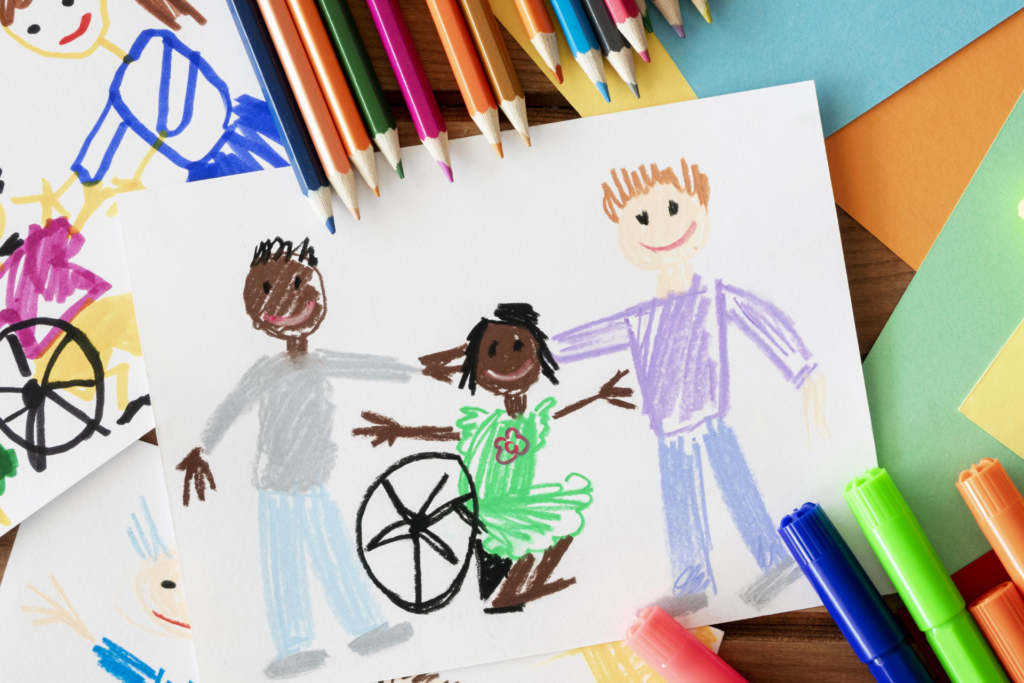
Your child picks up a crayon, scribbles across the page, and hands you their masterpiece with a proud smile. In that moment, they’re not just making random lines — they’re building confidence, learning patience, and developing real skills. So how do you help them take that creativity to the next level?
Drawing isn’t about raw talent. It’s about learning fundamentals that any child can build with the right guidance. Whether you’re in Edmond, OK, or elsewhere in the Oklahoma City metro, a structured approach helps every young artist gain the confidence to create and keep improving.
Why Learning Drawing Fundamentals Matters
Research shows that art education has a real impact on cognitive and social development. According to the National Endowment for the Arts, kids involved in the arts show higher academic achievement, stronger problem-solving skills, and better emotional resilience. Here’s why drawing specifically helps:
- Boosts fine motor skills — holding a pencil, sketching shapes, and adding detail strengthens hand-eye coordination
- Builds focus and patience — finishing a drawing takes sustained attention
- Encourages creative thinking — learning to observe and interpret the world artistically fuels imagination and problem-solving
- Builds confidence — seeing real progress gives kids a sense of pride and accomplishment
A Step-by-Step Guide to Drawing Fundamentals
1. Understanding Basic Shapes
Every drawing starts with simple shapes. Circles, squares, triangles, and ovals make up the structure of almost any subject. Encourage your child to break objects down into basic shapes before adding details.
Tip: have them start with something familiar — a favorite stuffed animal or a cup — and sketch its basic shape first.
2. Mastering Lines and Strokes
Teaching kids to control their pencil strokes is key to better drawings. Focus on:
- Light strokes for initial sketches
- Bold lines to define structure
- Hatching and cross-hatching for shading practice
These simple exercises build line control and precision, and make the whole process more enjoyable.
3. Learning Proportion and Perspective
To make drawings look more realistic, kids need a sense of proportion and perspective. Simple exercises — like drawing a cube or sketching a face using guiding lines — can make a big difference.
Try this: have your child draw a basic house using a vanishing point to introduce the idea of perspective.
4. Exploring Light and Shadow
Shading is what brings a drawing to life. Show your child how light creates highlights and shadows. Practice with:
- Simple shading techniques like blending and stippling
- Observing real shadows by placing an object under a lamp and sketching how the light falls on it
5. Adding Details and Texture
Once the basics click, kids can refine their work with texture and detail. Encourage them to:
- Use small strokes to mimic fur or hair
- Experiment with different pencil pressures to create depth
- Look at real-life textures and try to replicate them
The Confidence That Comes With Mastering the Fundamentals
Mastering drawing fundamentals isn’t just about making art — it’s about building patience, focus, and self-expression. Whether your child dreams of becoming an artist or just loves to doodle, these skills will serve them well in school and beyond.
If you’re in Edmond, OK, or the greater Oklahoma City metro, Bloomfield Arts & Crafts Studio offers the perfect environment for kids to build these skills. Our structured approach helps children grasp the fundamentals in a way that feels natural and exciting, with beginner-friendly classes, hands-on guidance from experienced instructors, and a supportive creative community where kids can thrive.
Ready to give your child a meaningful creative experience? Sign up for a class at Bloomfield Arts & Crafts Studio today.